Benefits of Boxing for Kids: Confidence, Focus, Discipline and Safety

Updated: Aug 20
Parents often start looking for boxing lessons because their child needs a positive outlet.
Maybe their child has too much energy, trouble focusing, low confidence or too much time in front of a screen. Other parents want their child to become stronger, learn practical self-defense or find a sport that finally connects with them.
Properly structured youth boxing training can help with many of those goals—but the most important benefits often go far beyond learning how to throw a punch.
The Centers for Disease Control and Prevention lists improved attention and memory, stronger muscles and endurance, and a reduced risk of depression among the benefits of regular physical activity for children.
Research involving structured martial-arts programs—not boxing specifically—has also found possible improvements in children’s attention, self-regulation, resilience, coordination and physical fitness. The results depend heavily on the quality and structure of the individual program.
The key word is structured.
Boxing does not teach discipline simply because a child puts on gloves. The coach, training environment and expectations determine what the child actually learns.

What Are the Benefits of Boxing for Kids?
The benefits of boxing for kids can include greater confidence, focus, discipline, coordination, resilience and self-control when training is properly structured and supervised.
Boxing can be a positive activity for children when the training is age-appropriate, properly supervised and centered on skill development, control and safety.
A child does not need to spar, compete or receive blows to the head to learn boxing fundamentals.
Children can benefit from:
Proper stance and balance
Footwork and controlled movement
Heavy-bag training
Focus-mitt instruction
Shadowboxing
Defensive drills
Hand-eye coordination
Strength and conditioning
Non-contact partner exercises
Learning how to listen and respond to instructions
The purpose should not be to encourage aggression.
Good boxing instruction teaches children how to control their bodies, manage their energy, follow rules and treat coaches and training partners with respect.
A Controlled Way to Use Their Energy
Children experience excitement, frustration, nervousness and anger just like adults. They simply do not always know how to manage or communicate those emotions.
A properly run boxing session gives children a physical challenge with clear boundaries.
They learn that they cannot simply swing wildly at a heavy bag. They must listen, set their feet, maintain their balance, breathe properly, hold their hands in position and stop immediately when the coach calls time.
That teaches an important lesson:
Energy must be controlled before it becomes useful.
Boxing should never teach children that punching is the answer to anger. It should teach them that strong emotions and physical energy can be managed through concentration, movement, breathing and self-control.
The heavy bag is a training tool—not a replacement for communicating, resolving problems or treating other people with respect.
The American Psychological Association explains that physical exercise may support mood and help the brain respond to stress. Exercise should be viewed as one healthy physical outlet, not as a substitute for teaching children to discuss their feelings and resolve conflicts without violence.
Can Boxing Help Kids Develop Focus and Self-Control?
Boxing is built through repetition.
jab, defensive movement or footwork pattern hundreds of times before it begins to feel natural.
That process teaches the child that improvement does not happen simply because they want it to happen.
They must pay attention.
They must listen.
They must practice correctly.
They must continue working when the movement feels difficult.
A study published in the American Psychological Association journal Developmental Psychology found that children who completed a short, structured taekwondo program showed improvements in attentional self-regulation and reductions in symptoms of conduct problems.
You can review the study here:
Taekwondo and boxing are different sports, so the study does not prove that every boxing program will create the same result. However, it supports the idea that properly structured combat-sports training can require children to concentrate, follow instructions and control impulsive movements.
That is where real discipline comes from—not yelling, punishment or pointless exhaustion, but clear standards, honest correction and consistent effort.
Those habits may carry over into schoolwork, home responsibilities and other areas of a child’s life.
Can Boxing Help Kids Build Confidence?
There is a difference between telling a child to be confident and giving that child a genuine reason to feel confident.
Boxing provides visible evidence of progress.
A child notices when they can finally:
Maintain a balanced stance
Remember a combination
Complete a difficult training round
Move their feet without crossing them
Hit the mitts with better accuracy
Follow instructions more quickly
Perform a movement they previously struggled with
That is earned confidence.
The World Health Organization identifies cognitive development, motor skills, self-esteem, social integration and overall well-being among the benefits of regular physical activity for children and adolescents.
Boxing can be especially valuable for children who have not connected with traditional team sports.
Although a child may train around other students, boxing development is still individual. The child can improve at an appropriate pace without competing for playing time or comparing every achievement with another athlete.
The first goal is not to become better than everybody else.
It is to become a little better than they were during the previous training session.
Boxing Teaches Children How to Handle Mistakes
Nobody learns how to box without making mistakes.
Children cross their feet, drop their hands, lose their balance and forget combinations.
Experienced fighters make technical mistakes too.
A good coach does not treat every mistake as a failure.
The coach identifies what went wrong, explains the correction and gives the child another opportunity to try.
Over time, the child begins to understand that making a mistake means:
Adjust and try again—not give up.
A randomized controlled study of a martial-arts-based intervention found a positive effect on student resilience immediately following the program. The results were stronger immediately after the program than at a later follow-up, showing that these benefits should not be exaggerated or treated as permanent after only a few sessions.
Read the study here:
A broader review also found that the available research connecting martial-arts training with mental-health outcomes was limited but generally positive:
Boxing is not a magic solution. The potential benefits are more likely to develop through consistent participation, responsible coaching and reinforcement at home.
Can Boxing Help Kids Manage Stress?
Children carry stress too.
Schoolwork, friendships, family changes and uncertainty can create tension that children may not always know how to explain.
Boxing requires concentration in the present moment.
During mitt work, footwork drills and shadowboxing, the child must focus on:
Breathing
Balance
Positioning
Movement
Timing
The coach’s instructions
That concentration can temporarily redirect attention away from outside stress and toward a clear physical task.
The CDC reports that physical activity can support thinking, learning, problem-solving, memory and emotional balance. It may also help reduce anxiety or depression.
Boxing is not therapy, and no boxing coach should claim to replace a licensed psychologist, counselor or other mental-health professional.
However, a positive training environment can become one useful part of a child’s broader physical and emotional support system.
Boxing Develops Coordination and Body Awareness
A properly thrown punch begins with the feet—not the arm.
The movement travels through the legs, hips, shoulders and hands in sequence. That makes boxing a demanding form of physical education that requires the entire body to work together.
Boxing training can help children work on:
Balance and posture
Hand-eye coordination
Linear and lateral footwork
Agility
Timing and reaction
Controlled breathing
Spatial awareness
Overall body control
A review of martial-arts participation among children reported improvements in physical qualities including cardiorespiratory fitness, speed, agility, strength, flexibility, coordination and balance.
Read the review here:
A 2025 medical review also noted that youth martial arts may offer developmental benefits but require knowledgeable supervision and responsible injury prevention:
For a child who is constantly fidgeting or struggling with physical coordination, learning to move with control and purpose can be a meaningful accomplishment.
Respect Is Part of the Training
A legitimate boxing program should never teach children to become bullies.
It should teach the opposite.
Children should learn respect for:
Their coach
Their training partners
The equipment
The rules
Their own developing abilities
The safety of everyone around them
They learn to wait their turn, work with partners, listen to instructions and control their physical strength.
As children become more skilled, they must also become more responsible.
Learning how to box does not give a child permission to start fights. Proper training should reinforce the importance of avoiding unnecessary conflict, using good judgment and treating other people with respect.
Is Boxing Training Safe for Kids?
Parents should understand that boxing training and competitive boxing are not the same thing.
Children can develop discipline, coordination, confidence, balance and physical conditioning through:
Footwork drills
Shadowboxing
Heavy-bag training
Mitt work
Defensive movement
Reaction exercises
Strength and conditioning
Controlled partner drills without head contact
A child does not need to be hit in the head to learn stance, footwork, defense, combinations or conditioning.
Head contact is a legitimate concern in competitive youth boxing.
The American Academy of Pediatrics published a policy statement warning about the risk of concussion and injuries to the head, face and neck in competitive boxing, where deliberate blows to the head are part of the sport.
That statement was retired in March 2025, so it should be treated as an important historical pediatric safety reference rather than a current active policy.
Read the statement and its current status here:
Parents who want their child to receive the fitness and developmental benefits of boxing can choose non-contact instruction centered on footwork, balance, defense, mitt work, bag work and conditioning.
Do Kids Have to Spar to Learn Boxing?
No.
Children can learn a great deal about boxing without sparring.
They can develop:
Proper stance
Balance
Footwork
Punching mechanics
Defense
Distance awareness
Hand-eye coordination
Conditioning
Confidence
Self-control
Sparring should never be treated as something every child must do.
Before allowing a child to participate in contact training, parents should ask:
Is sparring required?
At what age is contact introduced?
How are children matched by age, weight and experience?
What protective equipment is required?
How does the coach respond to a possible concussion?
Are beginners separated from experienced competitors?
Can a child participate without competing?
Are coaches properly registered and background-screened?
Parents should also speak with their child’s pediatrician before allowing contact boxing, particularly when the child has a history of concussion or another medical condition.
Coach Registration, Background Checks and Athlete Protection
Parents considering a registered amateur boxing program should understand the organization’s current safety requirements.
USA Boxing’s SafeSport program provides information about athlete protection, misconduct prevention and SafeSport education.
USA Boxing’s coach-membership information states that coaches must complete annual background screening through their membership accounts.
Parents can also review the organization’s broader membership and background-screening requirements.
Registration and background screening do not automatically guarantee that a particular coach is right for every child. Parents should still observe how the coach communicates, corrects mistakes and manages safety.
Why the Coach Is the Real Variable
The same gloves and the same heavy bag can create two completely different experiences.
One training environment teaches control, patience, technique and respect.
Another may reward aggression, humiliation or winning at any cost.
The coach—not the equipment—determines which experience the child receives.
Parents should observe a training session and pay attention to:
How the coach speaks to beginners
Whether corrections are clear or humiliating
Whether safety rules are consistently enforced
How experienced students treat new students
Whether children are pressured into contact
Whether the coach teaches technique or simply creates exhaustion
Whether children are matched appropriately
Whether parents are allowed to ask questions
A good youth boxing coach should be demanding without being reckless, corrective without being demeaning and patient without lowering the training standard.
Private Boxing Training for Kids in Huntington Beach
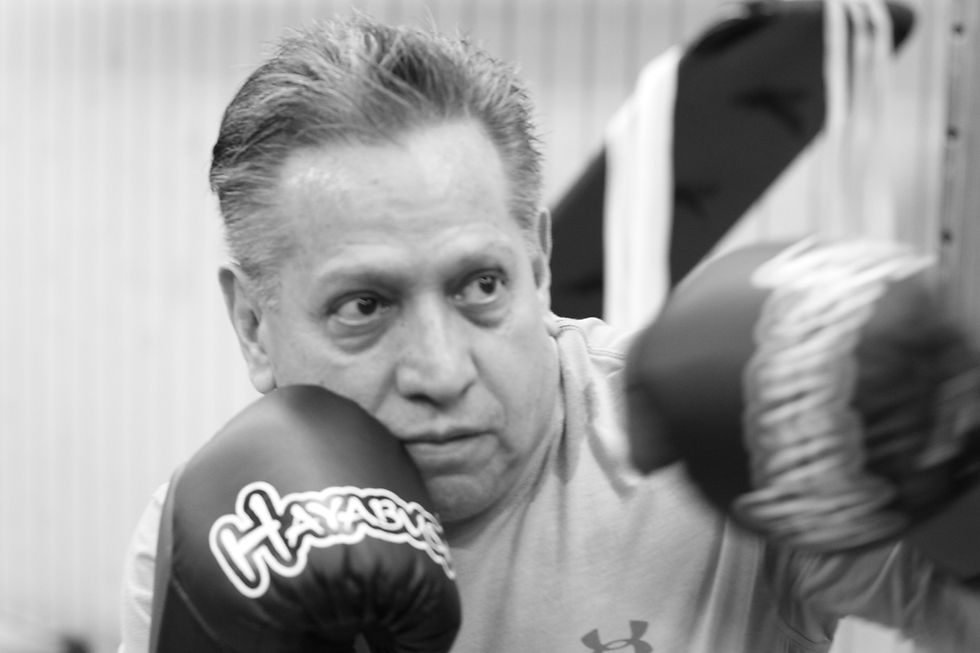
I am Coach Al Franco, and I have nearly three decades of experience coaching beginners, youth athletes, amateur competitors, professional fighters, and private clients.
Today, I provide private one-on-one boxing training for youth athletes and beginners by appointment at A1 Boxing Club in Huntington Beach. Families from throughout Huntington Beach may inquire about training.
When working with a child or beginner, the first priority is not punching power or competition.
I evaluate how the student:
Listens
Moves
Balances
Follows instructions
Responds to correction
Controls speed and strength
Handles frustration
From there, training can begin with proper stance, footwork, balance, positioning, defense, coordination and controlled punching mechanics.
Children do not need to arrive in shape or already know how to box. Training begins at their current ability and develops from the ground up.
There is no requirement to spar. Students can learn real boxing fundamentals without being rushed into contact or competition.
PParents can learn more about my approach to beginner boxing lessons and private coaching in Huntington Beach.
For families seeking focused one-on-one instruction, my private boxing coaching in Huntington Beach allows training to be adjusted around the child’s age, ability, coordination, attention level and goals.
The purpose is not to create aggression.
The purpose is to help the student become more coordinated, confident, disciplined and capable through properly structured boxing instruction.
To discuss whether private boxing training is the right fit for your child, request a private consultation with Coach Al Franco.
Real boxing instruction. Individual attention. Development without gimmicks.

I agree with this, ant combat thank youpe sport can help build kids mental and physical strength.